Three questions for Alexandre Djiane and Aurélien Brun
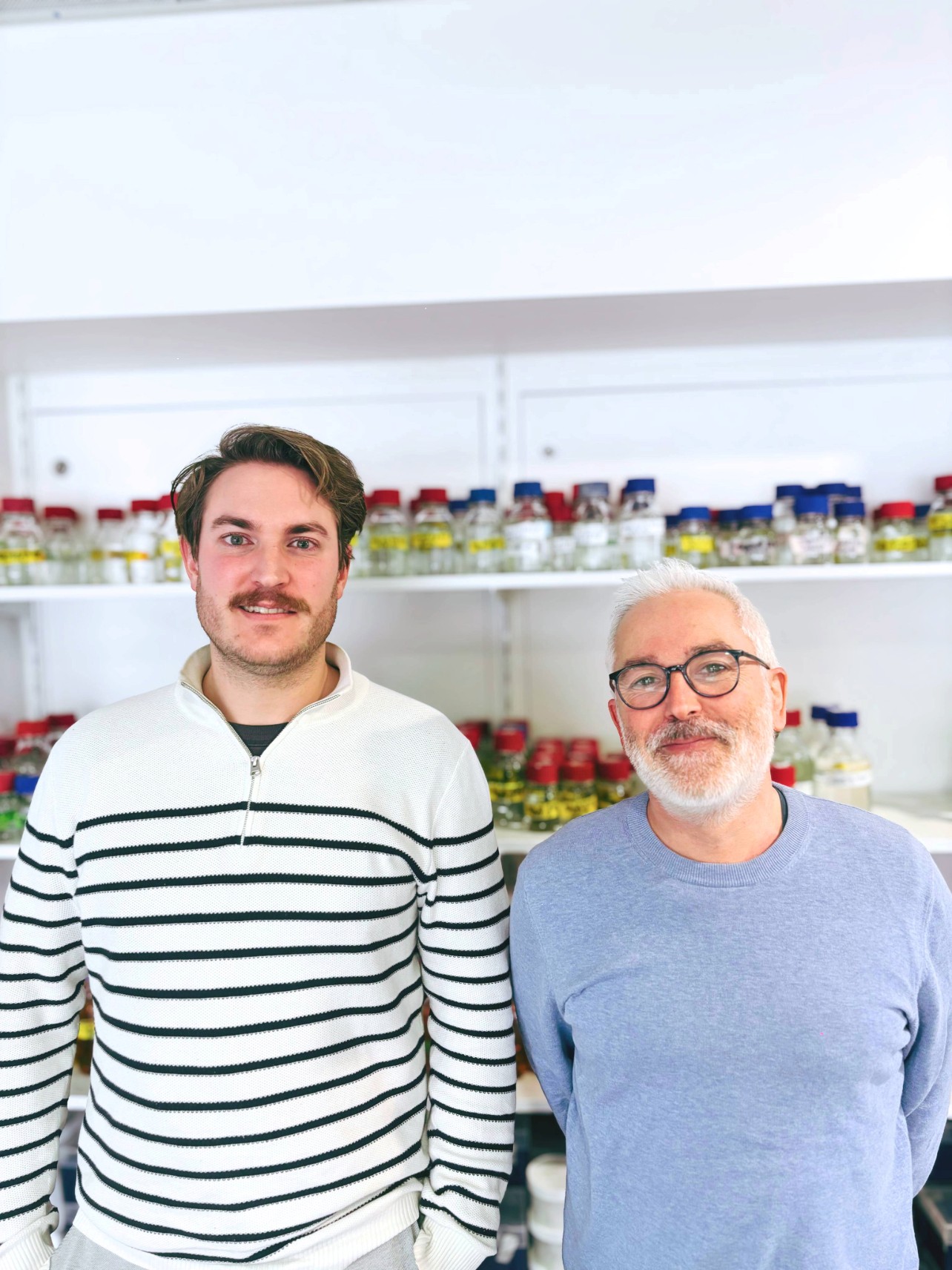
The team of Dr. Alexandre Djiane, within the Institut de Recherche en Cancérologie de Montpellier (IRCM) and supported by SIRIC Montpellier Cancer, recently welcomed a new postdoctoral researcher, Dr. Aurélien Brun. His arrival marks an important step forward in developing research on metabolism and cachexia, one of SIRIC’s main research axes. By combining clinical, nutritional, and biological expertise, Alexandre Djiane’s team aims to gain deeper insight into the metabolic mechanisms underlying cancer-associated cachexia. Through this joint interview, we not only highlight the background of Aurélien Brun but also shed light on the research dynamic that drives this team — one that lies at the heart of SIRIC Montpellier Cancer’s ambition to better understand and counter the metabolic alterations linked to tumor progression.
Alexandre, could you explain what cachexia is and why it represents such a major issue in cancer?
Cachexia is a systemic syndrome often associated with advanced cancers but also with other chronic diseases. It manifests as a significant loss of body weight, particularly skeletal muscle mass, which directly impacts a patient’s ability to endure treatment. A patient suffering from severe cachexia sees their survival chances cut in half. Although this phenomenon has been recognized since the 1950s, it wasn’t until 2011 that a consensual medical definition was established. The World Health Organization (WHO) now recognizes cachexia as a disease in its own right, paving the way for dedicated therapeutic strategies. However, simply increasing caloric intake is not sufficient: muscle loss is multifactorial and varies between patients. Our research, therefore, aims to better understand the diversity of the biological mechanisms involved and to identify biomarkers that could predict the onset of this condition.
Aurélien, could you tell us about your background before joining Alexandre Djiane’s team at SIRIC Montpellier Cancer?
I am a trained dietitian and initially worked in therapeutic patient education, coordinating, under the supervision of Dr. Pierre Senesse at the ICM, a project supported by the Regional Health Agency (ARS) focused on enteral and parenteral nutrition. The goal was to help patients gain autonomy in managing their illness, with the support of expert patient groups. I later pursued a Master’s degree that led to a PhD carried out between France and Canada, where I collaborated with several research groups, including that of Prof. Vickie Baracos at the University of Alberta, one of the world’s leading experts on cancer-associated cachexia. This path naturally led me to join Alexandre’s team at SIRIC, where we share the same goal: improving the quality of life of cancer patients, from early management through to treatment.
What are the main objectives of your current research and the next steps in your projects?
Our priority is to identify early and specific biomarkers of cachexia. To achieve this, we have established a Cachexia Biobank (BCB) that collects blood samples from patients followed both retrospectively and longitudinally. These samples allow us to analyze multiple types of markers — proteins, metabolites, circulating immune cells — leveraging the platforms and resources of SIRIC Montpellier Cancer. We already have an initial dataset from 80 patients, with preliminary analyses underway. At the same time, we are investigating, at the muscle tissue level, the mechanisms of atrophy and catabolism to understand how muscle cells respond to tumor-derived stimuli. Ultimately, our dual objective is to predict the onset of cachexia more accurately and to lay the groundwork for therapeutic approaches capable of slowing its progression.